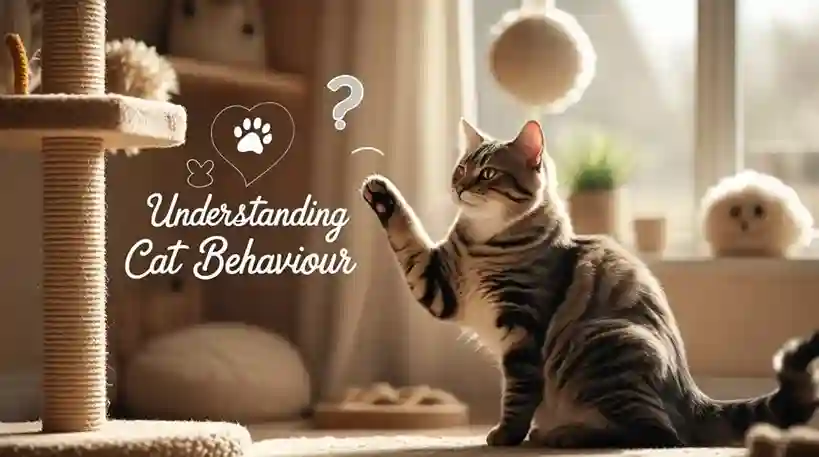
You’re sipping your morning coffee when you see it: a bird lands on the windowsill. Your cat, a moment ago a puddle of fur, is now at attention. Her eyes are locked, her body twitches, and then it comes—a rapid, high-pitched, “ek-ek-ek” sound, a mix of a meow and a tweet. This fascinating noise is cat chirping, and if you’ve ever wondered what it means, you’re not alone.
As I write this, my own cat, Milo, is perched on her cat tree, emitting a rapid-fire series of chirps at a squirrel in the yard. This adorable cat chirping is a daily occurrence in my home, and it never fails to fascinate me. It’s a sound that seems to bridge the gap between our cozy domestic companions and the skilled predators of their wild ancestry.
But what does science say? We’ve consulted insights from leading feline behaviorists to decode the true meaning behind your cat’s chirping. This comprehensive guide will explore the many causes of chirping, what the experts reveal about this unique behavior, and how you can best respond to it. We’ll also look at how top-rated products can help you safely engage the very instincts that drive this charming form of cat chirping.
🐾 Recommended for Pet Parents
Discover trusted resources, tips and tools for your furry friend!
Explore Free Pet Resources →What Exactly is Cat Chirping? Defining the Sound
Before we dive into the “why,” let’s define the “what.” This specific type of cat chirping is a distinct vocalization, separate from the meows your cat uses to demand food or the purrs that signal contentment.
So, what does cat chirping sound like? It’s typically a short, high-pitched, and staccato sound. It can range from a single, melodic note (often called a “trill”) to a rapid sequence of sounds, frequently with a rolling “r” or a clicking, chattering quality. It’s not a sound cats use with each other in hostile situations; you’ll never hear a hiss or growl in a true chirp. This form of chirping is generally one of excitement, interest, or friendly communication.
According to the American Association of Feline Practitioners, vocalizations like chirping are a key part of the feline communication repertoire, distinct from the meows they have largely developed to communicate with humans [1]. Understanding this difference is the first step to understanding your cat’s complex inner world.
The Hunter’s Instinct: The Primary Reason for Cat Chirping
The most documented trigger for cat chirping is the sight of prey. Whether it’s a bird, a squirrel, a fly, or even a leaf blowing in the wind, this context for chirping is a clear window into your cat’s primal instincts.
The “Frustrated Hunter” Theory
The prevailing theory is that this form of cat chirping is an expression of predatory excitement and frustration. Your cat sees the prey, their hunting drive kicks into high gear, but there’s an impassable barrier—the window. The excitement is palpable, but the inability to act on it creates a surge of frustrated energy that manifests as that unique chirping and chattering sound.
The Science Behind the Chatter
But what about the jaw-clattering that often accompanies this type of cat chirping? This is where it gets even more interesting. Feline behaviorist Dr. Mikel Delgado suggests that this chirping and the accompanying ‘chattering’ may be a sign of frustrated predatory excitement or an involuntary motor pattern mimicking the killing bite [2].
Another theory posits that the rapid jaw movement is a rehearsal for the precise, neck-snapping bite cats use to dispatch their prey. It’s as if they are “practicing” the fatal motion in mid-air. A third, more technical explanation is that it’s a neuromuscular overload—the cat’s brain is so flooded with predatory excitement that it causes the jaw muscles to tremble and chatter involuntarily.
No matter the exact mechanism, this specific cat chirping behavior is a pure, unfiltered expression of your cat’s inner predator.
To safely satisfy this instinct, provide a dedicated ‘watch zone.’ A sturdy window perch gives your cat a front-row seat to the action, often leading to a happy session of chirping without the same level of frustration from being unable to reach the prey.
One of the most highly-rated options on Amazon is the K&H Pet Products EZ-Mount Window Bed. It easily attaches to most windows with sturdy suction cups, creating a comfortable hammock for your cat. Reviewers love that it provides hours of entertainment and is a favorite spot for their cats, leading to plenty of excited cats chirping as they watch the world go by.
More Than Just Hunting: Other Meanings Behind the Chirp
However, a cat’s chirping isn’t always about the hunt. If you pay close attention, you’ll notice your cat uses this sound in a variety of non-predatory contexts. This versatile form of cat chirping is a key part of their social vocabulary.
A Greeting of Acknowledgement
Have you ever walked into a room and been greeted by a short, sweet “brrp” or chirp? This is your cat’s way of saying, “Hello! I see you!” or “You’re home!” This friendly chirping is a sign of a happy, social cat who is acknowledging your presence in a positive way. It’s often accompanied by an upright tail (the “question mark” tail) and a relaxed posture.
A Signal of Curiosity and Interest
Your cat might also chirp when they are investigating something new or intriguing that isn’t necessarily prey. Maybe you’ve brought out a new toy, or there’s a strange bag on the floor. A soft chirp can mean, “What’s this?” as they process the novel stimulus. This type of cat chirping signifies engagement and curiosity about their environment.
A Call for Attention
Cats are clever, and they quickly learn what behaviors get a response from their humans. Many owners find that their cat will look at them and let out a deliberate chirp. This attention-seeking cat chirping can be a request for play, food, or pets. They’ve learned that this particular sound is effective in getting your focus, much like a meow but often perceived as more endearing.
Mother-Kitten Communication
The roots of this social cat chirping begin at birth. Mother cats use chirps and trills to communicate with their kittens, often to get their attention or to call them to follow her. Kittens learn this sound as one of safety and guidance. This early association is why the chirp remains such a positive, affiliative sound throughout a cat’s life. When your adult cat chirps at you, they may, on some level, be relating to you as a family member.
If your cat’s chirping seems directed at you, they might be asking to play! Channel that energy into a positive activity with an interactive wand toy. This allows them to act out their predatory sequence—stalking, chasing, and pouncing—in a rewarding and safe way, strengthening your bond and providing essential exercise.
A top-rated choice is the GoCat Da Bird Teaser Wand. Its realistic feather flight and crinkly sound trigger a powerful prey drive in most cats. The long, sturdy wand keeps you involved in the play session, making it a fantastic way to respond to your cat’s playful chirping.
The Science and Psychology of the Chirp
The fascinating behavior of cat chirping is rooted in both deep-seated instinct and learned social behavior. While we can’t know exactly what a cat is thinking, science gives us strong clues.
From a physiological standpoint, the sound is produced by a rapid glottal movement and air passing through the vocal cords. The chattering involves a rapid clicking of the teeth, which is why it sounds so distinct from a meow, which is a longer, more open-throated vocalization.
Psychologically, it’s a behavior that serves multiple masters. It’s an innate, hardwired response to prey (the instinctual chirping), a learned social tool (the greeting chirping), and a possible expression of intense, mixed emotions. A study published in Behavioural Processes found that cats have a much wider range of vocalizations than previously thought, and that these sounds are used in flexible ways depending on the context and the recipient [3]. This flexibility is key to understanding the multifaceted nature of cat chirping.
How to Respond to Your Cat’s Chirps (A Practical Guide)
Understanding the context of your cat’s chirping is the first step to an appropriate response. Here’s how you can engage with your cat based on what their chirps likely mean.
Responding to Prey-Driven Chirps
Acknowledge, Don’t Punish: Remember, this is natural instinct. You can calmly verbalize back, “Yes, I see the birdie.” This acknowledges their communication without escalating their frustration.
Ensure Safety: If your cat is an indoor-outdoor cat, this cat chirping is a clear sign their prey drive is active. Be extra vigilant when opening doors to prevent an unplanned hunt.
Responding to Social Chirps
Positive Reinforcement: Always respond to a greeting chirp! Answer with a cheerful “Hello!” a gentle pet, or a head scratch. This reinforces the positive social bond.
Initiate Interaction: If your cat chirps and seems to want attention, take a few minutes for a cuddle or a play session. Engaging with this type of chirping strengthens your relationship.
Redirecting Attention-Seeking Chirps
Assess the Need: Is it near mealtime? Is their water bowl empty? Address their basic needs first.
Provide Enrichment: If they seem bored, redirect their energy. This is where puzzle toys and interactive play come in.
For the clever cat who chirps for food or out of boredom, a puzzle feeder is an excellent way to engage their brain and slow down eating. This turns mealtime into a rewarding ‘hunt,’ addressing the deep-seated instinct that often drives cat chirping.
The Trixie Pet Activity Strategy Game is a popular Amazon option. It has multiple compartments and movable parts that your cat must manipulate to release the kibble or treats. This provides mental stimulation, reduces boredom, and can help prevent obesity by slowing down fast eaters. It’s a productive way to answer your cat’s vocal demands for engagement.
Cat Chirping vs. Other Vocalizations: A Quick Guide
To the untrained ear, it can be easy to confuse cat chirping with other sounds. Here’s a quick, scannable guide to help you tell them apart.
| Vocalization | Sound Description | Typical Meaning |
| Chirping/Trilling | High-pitched, short, melodic, rolling “r” sound. | Excitement, greeting, curiosity, interest. |
| Chattering | A rapid “ek-ek-ek” or teeth chattering. A subset of chirping. | High predatory frustration, often at birds. |
| Meowing | Drawn-out, variable in pitch and length. “Meee-oww.” | General communication directed at humans (greeting, specific demand, complaint). |
| Purring | Low, continuous, rhythmic rumble. | Primarily contentment and self-soothing, but can also occur when in pain. |
| Hissing/Spitting | Sharp, explosive, airy sound. “Tsssss!” or a quick “Pfft!” | Fear, aggression, pain. A clear warning to back off. |
| Yowling | Long, drawn-out, mournful moan. | Distress, disorientation (e.g., in senior cats with cognitive decline), or mating calls. |
When Should You Be Concerned? A Note on Health
While cat chirping is almost always a normal behavior, any sudden, significant change in your cat’s vocalization patterns should be noted. If your normally quiet cat becomes excessively vocal, or if their chirps sound strained or painful, it’s wise to consult your veterinarian.
Increased vocalization can sometimes be linked to medical issues such as hyperthyroidism, hypertension, or pain, especially in older cats [1]. It’s always better to err on the side of caution and rule out any underlying health problems.
FAQs About Cat Chirping
1. Is cat chirping a sign of happiness?
Often, yes! While chirping at prey can signal frustration, chirping directed at you is typically a happy greeting, a sign of recognition, or a request for attention. It’s generally a positive form of communication in social contexts.
2. Why does my cat chirp when I talk to them?
This is a wonderful sign of your bond! Your cat is likely responding in kind, engaging in a “conversation” with you. They are acknowledging your voice and participating in this social interaction, much like how they would communicate with another cat in their family.
3. What is the difference between cat chirping and chattering?
Chattering is a specific, rapid-fire subtype of cat chirping that usually involves a clicking or jaw-clattering sound. It is almost exclusively linked to a high state of predatory excitement and frustration, often when a cat sees a bird or squirrel they can’t reach.
4. Why does my cat chirp at me instead of meow?
Your cat may have learned that you respond positively to chirps! Chirps and trills are often used for more positive, social interactions than demanding meows. They might be using this sound to say a friendly “hello” or to initiate play in a less forceful way than a loud meow.
5. Should I chirp back at my cat?
Absolutely! Chirping back at your cat can be a great way to strengthen your bond. It shows them you are engaged and responding to their communication. Many cats find it reassuring and will even continue the “conversation” with you.
6. Is chirping more common in certain cat breeds?
While any cat can chirp, breeds known for being particularly vocal and people-oriented, such as Siamese, Bengals, and Sphynxes, may chirp more frequently. However, this charming behavior is seen in moggies and purebreds alike.
7. Why does my cat chirp when playing alone?
This is a sign of a happy and engaged cat! That burst of cat chirping during solo play indicates they are fully immersed in their predatory sequence, “hunting” their toy. It’s an expression of excitement and instinctual drive.
8. My cat never chirps. Should I be worried?
Not necessarily. Just like people, cats have individual personalities and communication styles. A cat that doesn’t chirp may simply be more quiet or may express itself through other means, like purring, blinking, or body language. It only becomes a concern if it’s accompanied by other signs of illness or stress.
Conclusion: Embrace the Chirp
The unique phenomenon of cat chirping is a beautiful blend of ancient instinct and modern companionship. It’s a sound that connects the cozy feline on your couch to the agile hunters from which they descended. From the excited chattering at a window-sparrow to the soft trill that greets you at the door, this behavior is a complex and endearing form of feline communication.
By understanding the insights from feline experts and paying close attention to context, we can better appreciate these complex communications. Embrace your cat’s unique voice. Their cat chirping is a special part of your shared bond, a tiny echo of the wild that makes your domestic life together all the more interesting. By providing appropriate outlets like window perches, interactive toys, and puzzle feeders, you can ensure your cat’s cat chirping remains a sign of a stimulated, engaged, and happy feline.
Sources
- American Association of Feline Practitioners. (n.d.). Feline Behavior Guidelines.
- Delgado, M. (2021). Why Do Cats Chatter at Birds?
- Schötz, S., van de Weijer, J., & Eklund, R. (2017). Melody in Human–Cat Communication: A “Prosodic Pilot”. Behavioural Processes, 141, 297-303.
Disclaimer: This article may contain affiliate links. As an Amazon Associate, we earn from qualifying purchases. This does not affect the price you pay and helps us continue to provide expert-backed content.