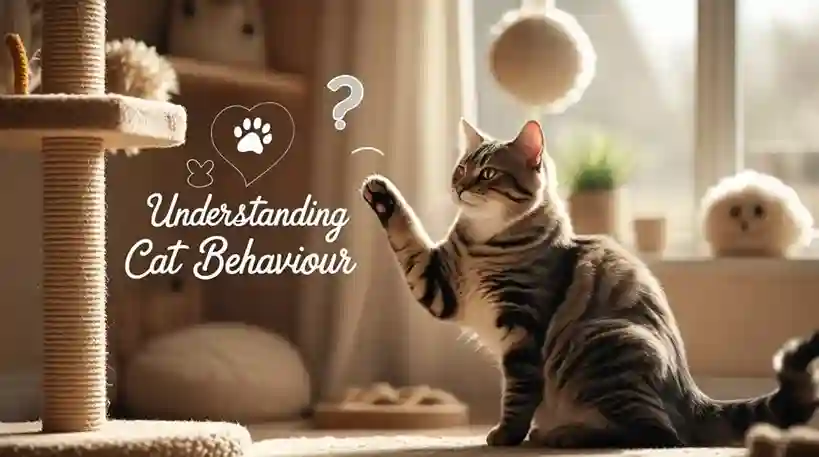
You’re settled on the sofa, scrolling through your phone, when you feel a familiar gaze. You look up to see your cat, perched on the armchair, watching you. Instead of an inscrutable, unblinking stare, you’re met with a slow, deliberate closing of their eyes, held for a moment before they open again with a look of pure serenity. That was no accident—it was a conversation.
This behavior, known as the “cat slow blink,” is one of the most profound and overlooked forms of feline communication. While a meow might be a demand for food and a purr a sign of contentment, the blink is something more intimate. Understanding the nuanced meaning behind your cat’s cat blinking is the key to unlocking a deeper, more trusting bond with your feline friend. This guide will break down exactly what different cat blinking patterns mean, teach you how to talk back in a language they understand, and, crucially, help you identify when a blink is a sign of trouble that requires a vet’s attention.
What is Cat Blinking? It’s Not Just for Moisture
At its most basic level, blinking is a physiological necessity. The rapid, involuntary blink that happens countless times a day serves to moisten the cornea, protecting it from dust and debris. This is no different from our own reflexive blinking.
However, the voluntary, communicative cat blinking we’re interested in is an entirely different behavior. It’s slower, more deliberate, and rich with meaning. When cat behavior experts talk about communicative cat blinking, they are specifically referring to this conscious gesture, most famously the “slow blink.” This isn’t just a blink; it’s a feline peace offering, often called a “cat kiss.” It’s a non-verbal cue that speaks volumes about your cat’s emotional state and their perception of you.
The Science of the Slow Blink: Why Trust Looks Like a Blink
The “cat kiss” isn’t just a charming myth; it’s a behavior backed by scientific observation. A landmark 2020 study published in the journal Scientific Reports by researchers at the University of Sussex provided the first systematic evidence that slow blinking are positive interactions between cats and humans.
The study involved two experiments. In the first, owners were instructed to slow blink at their cats. The researchers found that cats were significantly more likely to slow blink back at their owners after the owner had slowly blinked at them, compared to when the owner maintained a neutral face. In the second experiment, the researchers themselves, who were unfamiliar to the cats, performed the slow blink. The results showed that cats were not only more likely to slow blink in return but were also more likely to approach the experimenter’s outstretched hand after a slow-blinking interaction.
So, why does this work? The prevailing theory lies in feline body language. In the wild, closing one’s eyes in the presence of another is the ultimate sign of trust, as it makes an animal vulnerable to attack. By slowly closing its eyes while looking at you, your cat is signaling, “I feel so safe with you that I am willing to let my guard down.” This research confirms that this specific type of cat blinking is your cat’s way of expressing comfort and non-aggressive intent. When you receive a slow blink, you are being awarded a feline badge of trust.
How to Talk Back: Your Step-by-Step Guide to Slow Blinking
Now for the fun part: you can actively participate in this bonding ritual. “Talking” to your cat through blinking is simple and can profoundly strengthen your relationship. Follow these steps to become fluent in the language of the slow blink.
Set the Scene: Choose a moment when your cat is relaxed and content—perhaps while they are lounging on a favorite blanket or basking in a sunbeam. Avoid trying this when they are amped up from play, eating, or are clearly focused on something else, like a bird outside the window.
Make Soft Eye Contact: Catch your cat’s gaze without staring intently. Your expression should be soft and calm. A hard, unblinking stare can be perceived as a threat in the animal kingdom.
The Action: Slowly narrow your eyes, as if you are smiling with them, and then close them completely. Hold this closed-eye position for one to two seconds. It should feel like you’re blinking in slow motion.
The Finish: Open your eyes slowly and gently glance away, breaking the gaze. This signals that you mean no harm and concludes the “sentence.”
You may not get a response immediately, but with patience, you likely will. To make these moments even more rewarding, try this during a calm petting session. Using a gel lickable treat like Tiki Cat Stix can put your cat in a blissful, receptive mood, making them more likely to engage in this trusting cat blinking. The act of sharing a positive experience like a treat can reinforce the positive association with your gentle communication.
Beyond the ‘I Love You’: A Glossary of Cat Blinking
While the slow blink is the star of the show, it’s not the only message your cat’s eyes are sending. Context is key to decoding the full glossary of cat blinking. Paying attention to the speed and situation will make you a master interpreter.
The Rapid-Fire Blink: If your cat is blinking rapidly, almost like a twitch, it can signal uncertainty, mild stress, or a reaction to an irritant like dust or a strong smell. If you’ve just introduced a new piece of furniture or a guest is over, this type of cat blinking might mean your cat is processing the change and feeling slightly uneasy.
The Unblinking Stare: This is the opposite of friendly cat blinking. A hard, fixed stare in the cat world is a challenge or a sign of high alert. It’s often seen during standoffs between cats or when your cat is in full predator mode, focused on a toy or a bird. If your cat is staring at you this way, try breaking the tension with a slow blink to reassure them.
Squinting or Half-Blinking: This is the close cousin of the slow blink and is almost always a sign of pure contentment and relaxation. This relaxed cat blinking is often seen when they’re basking in a sunbeam, being gently petted, or falling asleep. It’s a less formal but equally positive version of the “I trust you” message.
If you notice rapid blinking that seems stress-related, consider whether there’s been a recent change in the home. A Feliway Classic Calming Diffuser can help create a reassuring environment by releasing synthetic feline facial pheromones, promoting a sense of security and potentially encouraging more of the calm, slow-motion cat blinking you love.
When Cat Blinking is a Red Flag: A Vet’s Warning
It is absolutely vital to differentiate between behavioral cat blinking and blinking that is a symptom of a medical problem. While a slow blink is a sign of love, certain types of blinking can be a cry for help.
You should be concerned and contact your veterinarian if you observe any of the following:
Excessive Blinking and Squinting: If one or both eyes are being held partially closed with frequent, forced blinks, this is a classic sign of pain. Common causes include a corneal ulcer (a scratch on the surface of the eye), conjunctivitis (pink eye), or a foreign object lodged under the eyelid.
Keeping One Eye Closed: This is an obvious and clear indicator of significant discomfort or pain in that specific eye.
Pawing at the Eye Accompanied by Blinking: If your cat is repeatedly pawing at their face or rubbing their eye along the furniture while blinking excessively, they are trying to relieve discomfort. This often makes the problem worse.
Visible Discharge or Redness: Any cloudiness, tearing, mucus, crustiness, or redness in the eye, combined with abnormal blinking, warrants an immediate appointment.
If you see these signs, your first step is to search for a ‘veterinarian near me’ or contact your regular vet immediately. This is not normal, communicative cat blinking; it is a medical symptom. Eye problems can escalate quickly and, in some cases, lead to permanent vision loss if left untreated.
Eye Health Essentials: Supporting Your Cat’s Vision
Proactive care is the best way to ensure your cat’s eyes—the windows to their soul and the source of their loving blinks—stay healthy for years to come. Overall health is deeply connected to eye health.
A critical component is nutrition. Cats require a diet rich in specific nutrients to maintain good vision. Most notably, they need:
Taurine: An essential amino acid that cats cannot produce in sufficient amounts. A taurine deficiency can lead to central retinal degeneration and eventual blindness. This is why cat food is specially formulated, unlike dog food.
Vitamin A: Crucial for maintaining the health of the cornea (the clear front part of the eye) and the retina.
Support your cat’s overall eye health from the inside out with a high-quality diet that is balanced to meet these needs. Many veterinarians recommend science-backed formulas like Hill’s Science Diet Adult Optimal Care or Purina Pro Plan, which are fortified with the right balance of Taurine, Vitamin A, and other antioxidants to support all bodily functions, including those that keep their eyes—and their trusting cat blinking—healthy and bright.
FAQ: Your Top Cat Blinking Questions, Answered by Experts
What does it mean when a cat slow blinks at you?
It is a definitive sign of trust and affection, often called a “cat kiss.” This friendly cat blinking is your cat’s way of communicating that they feel safe, comfortable, and non-threatening in your presence. Scientific studies have confirmed this as a positive form of cat-human communication.
Should you slow blink back at your cat?
Yes, it is highly recommended. Returning the slow blink is a way to communicate your love and trust in a language they instinctively understand. It reinforces the bond you share through mutual cat blinking and can help a shy or nervous cat feel more secure around you.
Why does my cat stare at me without blinking?
An unblinking stare can signify intense curiosity or, in some contexts, a perceived challenge. It is the opposite of the friendly, trusting cat blinking. If your cat’s stare makes you uncomfortable, avoid staring back. Instead, break the tension by slowly closing your eyes in a soft blink and then looking away.
Is my cat blinking too much? When should I worry?
Behavioral cat blinking (slow, deliberate blinks) is normal and positive. Concern arises with excessive rapid blinking or squinting, especially if it’s persistent and one-sided. This type of blinking often indicates pain, an ulcer, or an infection and requires a prompt visit to the veterinarian to diagnose and treat the underlying issue.
Conclusion: Your Shared Language
The slow blink is a gift. It’s a simple, silent, yet powerful tool for cross-species communication that costs nothing but a moment of your attention. In a world where we often rely on words, this non-verbal exchange is a beautiful reminder of the pure connection we can share with our animals.
Tonight, as you wind down, try starting a conversation. Find your cat, meet their gaze, and give them a slow, deliberate blink. Watch closely. You might just see the subtle narrowing of their eyes in return, a tiny flicker of understanding. You’ve just learned one of their best-kept secrets; now it’s time to speak it. A world of deeper connection, built on a foundation of trust and understanding, is waiting in a blink.
Sources:
- Humphrey, T., Proops, L., Forman, J. et al. The role of cat eye narrowing movements in cat–human communication. Sci Rep 10, 16503 (2020).
- International Cat Care. “Communication in cats.”
- American College of Veterinary Ophthalmologists. “Common Eye Conditions in Cats.”
Disclaimer: This article is for informational purposes only and is not a substitute for professional veterinary advice. Always consult with your veterinarian regarding your cat’s health and any concerns about their behavior. As an Amazon Associate, I earn from qualifying purchases.