
You bought the tallest, most impressive best cat trees you could find. It has five levels, a plush condo, and three dangling toys. You assembled it with hope, presented it to your regal feline overlord… and they’ve since shown more interest in the cardboard box it came in.
If this sounds familiar, you’re not alone. The world of cat furniture is vast, and choosing wrong is an expensive lesson in feline indifference—or worse, a safety hazard.
The truth is, a cat tree isn’t just another piece of pet furniture. According to our veterinary consultant, Dr. Allona Jackson, DVM, it’s a critical tool for feline welfare. “A well-chosen cat tree directly addresses core feline instincts: to scratch, to climb, to survey their territory from a safe height, and to have a secure, enclosed place to rest,” she explains. “When these needs aren’t met, we often see stress-related behaviors like inappropriate scratching, anxiety, and even inter-cat conflict in multi-pet homes.”
Yet, in 2025, with more options than ever—from space-saving floral designs to fortress-like towers for giant breeds—the question isn’t just “which one looks good?” It’s “which one is right?”
This guide cuts through the overwhelm. Think of this as your master blueprint, your strategic command center for navigating the cat tree landscape. We’ve synthesized the latest 2025 models, materials, and trends with timeless principles of cat behavior, all filtered through a lens of veterinary expertise.
Here, you won’t just find a simple list. You’ll get a clear, step-by-step framework to diagnose exactly what your cat and your home need. Then, we’ll seamlessly connect you to our in-depth, hands-on reviews of the top models in every category. Whether you’re a new cat parent or a seasoned multi-cat household, this is your definitive starting point to find a cat tree that gets used, loved, and becomes the centerpiece of your cat’s world. Let’s begin.
Stop Guessing: Your 5-Point Cat Tree Decision Matrix
Buying a cat tree in 2025 shouldn’t be a gamble. The right choice is a logical conclusion, not a lucky guess. Before you even look at a single product, use this data-driven checklist. It transforms abstract needs into concrete requirements, ensuring the tree you buy will be safe, engaging, and a perfect fit from day one.
1. Assess Your Cat’s Size & Weight (The Non-Negotiable Safety Filter)
This is the foundation. A tree that’s too small or unstable isn’t just unused—it’s dangerous.
- The Data: For solo average cats (under 12 lbs), a sturdy base is key. For large and giant breeds (Maine Coons, Ragdolls, Savannahs over 15 lbs), you need engineering. Look for a base at least 24″ x 24″ and posts wrapped in dense, durable sisal.
- Vet Insight: Dr. Jackson emphasizes: “An unstable cat tree is a recipe for injury and lasting fear. A fall or a sudden tip can cause sprains, fractures, or teach a cat to avoid the tree entirely. For large breeds, the stress on joints from an unstable perch is a real concern. The tree’s weight capacity should exceed your cat’s weight by a significant margin—don’t just meet the minimum.”
- Your Action: Weigh your cat. Add the weight of all cats who might use it simultaneously. This is your minimum stability requirement.
- This is non-negotiable for big cats. Skip the guesswork and see models built for giants in our dedicated guide: Best Cat Tree for Large Cats.
2. Decode Your Cat’s Personality (The Engagement Blueprint)
Is your cat a…
- Timid “Wallflower” who hides under beds? They need security.
- Alpine “Climber” who scales bookshelves? They need height and challenge.
- “Scratch-Happy” Shredder targeting your sofa? They need robust scratching surfaces.
- “Lounge Lizard” who prioritizes 20-hour naps? They need plush, comfortable perches.
- Vet Insight: Dr. Jackson notes: “Matching the tree to personality is crucial for enrichment. A nervous cat will feel exposed on a high, open perch; they often prefer enclosed condos placed in a quiet, corner location. A confident, active cat will be bored by a simple condo and seeks vertical territory and interactive elements. Observe your cat’s favorite activities—that’s your blueprint.”
3. Audit Your Home’s Space & 2025 Aesthetic (The Reality Check)
Measure twice, buy once. A majestic 7-foot tower is worthless if it doesn’t fit.
- Vertical vs. Horizontal: Low-ceiling apartment? Focus on wider trees with broad bases and sprawling perches (like many Mau designs). High ceilings? Capitalize on vertical space with a towering activity center.
- The 2025 Trend – Pet Furniture as Home Decor: The era of beige carpet monstrosities is over. Modern cat trees are design elements. Think natural wood finishes, neutral tones, and sculptural shapes that complement your style.
- You don’t have to sacrifice style. Discover cat trees that are functional art in our roundups: Flower Cat Tree and Mau Cat Tree.
4. Set Your Realistic 2025 Budget (The Value Equation)
Price tiers tell a story:
- Budget (<$100): Expect solid basics—sisal posts, carpeted perches, functional stability. Focus is on core utility. (See our in-depth Yaheetech Multi-Level Cat Tree Review for a value champion.)
- Mid-Range ($100-$250): The sweet spot. Here you find better materials (real wood, thicker sisal), more thoughtful design, enhanced stability, and easier assembly.
- Premium ($250+): Investment pieces. Features include designer aesthetics, commercial-grade construction, whisper-soft ultra-plush, modular components, and easy-wash removable covers.
- Think Cost-Per-Year: A $200 tree that lasts 5+ years is a better value than a $80 tree that sags and is discarded in 18 months.
5. Consider Future-Proofing (The Forward-Thinking Factor)
Is a kitten or another cat in your 5-year plan? A bit of foresight saves money.
- For Future Kittens: Choose a tree with a mix of lower and higher perches so a small kitten can access it safely.
- For Potential Multi-Cat Homes: Look for multiple escape routes (no single-file stairs), several distinct resting spots at different heights, and ample scratching stations to reduce competition.
Your Cat Tree Matchmaker: Types, Pros, Cons & Best For
Now that you have your personal checklist from Part 1, let’s match your needs to the perfect cat tree type. This is your field guide to the ecosystem of cat furniture.
To make this instantly scannable—for you and for search engines—here is the essential breakdown. Use the table to find your front-runner, then explore the detailed analysis below.
The 2025 Best Cat Tree Comparison at a Glance
| Type | Best For | Key Feature | Vet’s Note | Explore Our In-Depth Guide |
|---|---|---|---|---|
| The Classic Tower | Most households, multi-cat families. | All-in-one activity: perches, condos, scratching. | “Ensure sisal posts cover most vertical surfaces to redirect scratching urges effectively.” – Dr. Jackson | Cat Tree Tower Guide |
| Space-Saver & Stylish | Apartments, modern décor, design-conscious owners. | Design-forward shapes that blend with furniture. | “A stable, stylish perch in a social area can greatly enrich a cat’s environment without dominating a room.” | Flower Cat Tree / Mau Cat Tree |
| Heavy-Duty & XL | Large, giant, or multiple heavy breeds. | XL perches, robust construction, high weight limits. | “Critical for safety and joint health. Never put a large cat on a tree rated for an average house cat.” – Dr. Jackson | Best Cat Tree for Large Cats |
| With Integrated Litter Box | Small spaces, privacy-seeking cats, reducing litter scatter. | Hidden enclosure that contains mess and odor. | “Can reduce stress for modest cats by providing a private, secure elimination area away from high-traffic zones.” | Cat Tree with Litter Box |
| The Value Leader | First-time buyers, budget-conscious owners, supplementary trees. | Maximum features (perches, sisal) per dollar. | “Stability is non-negotiable. Even on a budget, ensure the base is wide and the construction feels solid during assembly.” – Dr. Jackson | Yaheetech Multi-Level Review |
| The Essential Starter | Testing your cat’s interest, very limited space, minimalist needs. | Simple, compact design focused on core scratching. | “A great ‘starter kit’ to gauge a cat’s preferred scratching angle (vertical vs. horizontal) before a bigger investment.” | Cat Tree Basics |
Detailed Breakdowns: Finding Your Perfect Match
1. The Classic Multi-Level Tower
- The Vibe: The Swiss Army knife of cat trees. Often floor-to-ceiling, featuring multiple platforms, at least one condo/hideaway, and various scratching posts.
- Pros: Provides comprehensive enrichment (climbing, perching, hiding, scratching). Excellent for multi-cat households as it creates vertical territory.
- Cons: Can be bulky and visually dominating. Cheaper models may be wobbly.
- Ideal For: The household seeking a one-stop-shop for cat activity. As explored in our detailed Cat Tree Tower guide.
2. Space-Saving & Stylish Designs
- The Vibe: Cat furniture as intentional home décor. This includes wall-mounted shelves, minimalist wooden structures, and whimsical designs like the popular flower or cloud shapes.
- Pros: Saves floor space, elevates your home’s aesthetic, and can be configured to fit unique room layouts.
- Cons: Often less “all-in-one,” may require creative assembly or wall mounting. Some designs prioritize form over plush comfort.
- Ideal For: Urban dwellers and anyone who wants pet furniture that complements, rather than clashes with, their style. See the art of the possible in our Flower Cat Tree and sleek Mau Cat Tree features.
3. Heavy-Duty & XL Cat Trees
- The Vibe: The fortress. Built with thicker posts, wider and reinforced perches, ultra-dense sisal, and bases the size of a small coffee table.
- Pros: Unmatched stability and safety for big cats. Designed for longevity and intense use.
- Cons: Higher price point, significant physical footprint, can be very heavy.
- Ideal For: Owners of Maine Coons, Ragdolls, Savannahs, or multiple large cats. This is a safety-first category; explore our rigorously vetted picks for Best Cat Tree for Large Cats.
4. Cat Trees with Integrated Litter Box
- The Vibe: The all-in-one privacy suite. A cat tree with a discreet, enclosed compartment at its base designed to house a litter pan.
- Pros: Contains litter scatter and odor, provides a sense of security for the cat, and saves floor space by combining two functions.
- Cons: The litter box compartment can be cumbersome to clean. The entire tree may need relocation for deep cleaning.
- Ideal For: Studio apartments or homes where discreetly placing a litter box is a challenge. Evaluate the pros and cons of integrated solutions in our dedicated Cat Tree with Litter Box review.
5. The Budget-Friendly Value Leader
- The Vibe: Maximum utility, minimal frills. These towers focus on delivering key features (multiple levels, sisal posts, a condo) at an accessible price point through efficient design and materials.
- Pros: Makes cat tree ownership accessible. Great for testing if your cat will use a tree or as a supplementary tree in another room.
- Cons: Materials may be less plush or durable. Stability can vary greatly between models—research is key.
- Ideal For: First-time buyers or those on a strict budget who still prioritize core function. We’ve stress-tested a top contender; read our honest assessment in the Yaheetech Multi-Level Cat Tree review.
6. The Essential Scratching Post & Condo
- The Vibe: The pure fundamentals. A simple, often smaller structure focusing on one or two core functions: a solid scratching post and a single hideaway condo.
- Pros: Affordable, unobtrusive, perfect for targeted scratching correction or providing a single cat with a basic safe space.
- Cons: Limited enrichment potential. Won’t satisfy a climber or a multi-cat household’s need for territory.
- Ideal For: Supplementing a larger tree, very small spaces, or as a “test” unit. Understand the basics in our foundational Cat Tree guide.
Beyond the Hype: 2025 Materials & Safety Explained
Choosing the right type of cat tree is half the battle. The other half—and what truly determines its safety, longevity, and your cat’s satisfaction—lies in the quality of its construction. In 2025, it’s not just about what a tree has, but how it’s built. Let’s decode the specs that matter.
1. Stability Engineering: The Non-Negotiable Foundation
A wobbly cat tree is a failed purchase. It’s unsafe and will be abandoned by perceptive cats.
- The 2025 Standard: The Base-to-Height Ratio. As a rule, the base should be at least half the area of the tree’s total height. A 60-inch tall tree should have a base close to 30″ x 30″. For large cat trees, aim for a 2:3 ratio.
- Weight & Counter-Balancing: Weight isn’t just about capacity; it’s about lowering the center of gravity. A heavier base resists tipping. Many 2025 premium models use solid wood baseboards instead of particleboard.
- The Must-Have Safety Feature: Wall Straps. Dr. Jackson is adamant: *”For any tree over 4 feet tall, or in a home with energetic cats or children, a wall-anchoring strap is not an optional accessory—it’s a critical safety device. It prevents tragic tip-overs, especially during vigorous play or multi-cat chasing.”* If your tree doesn’t come with one, purchase a furniture strap separately.
2. Scratching Surfaces: Sisal, Carpet, or Cardboard?
Not all scratching posts are created equal. The material dictates effectiveness, durability, and safety.
- Sisal Rope or Fabric (The 2025 Gold Standard):
- Pros: Extremely durable and satisfying for cats to dig their claws into. The rough texture helps shed old claw sheaths naturally. It’s less likely to snag claws than loose-loop carpet.
- Cons: Can fray over time with extreme use. Lower-quality, loosely woven sisal wears out quickly.
- Vet Insight: Dr. Jackson recommends: “Sisal is the best choice for encouraging healthy scratching behavior. It provides the right resistance and doesn’t trap claws, which reduces the risk of a catastrophic snag and injury.”
- Carpet (The Common, Flawed Choice):
- Pros: Soft, familiar, and often cheaper.
- Cons: The biggest drawback is its appeal to claws. The loose loops can snag and tear, potentially trapping a claw. It’s also harder to clean and can transfer unwanted scratching behavior to your actual carpet.
- Best Use: As a resting surface on perches and condos, not as the primary scratching material.
- Corrugated Cardboard (The Disposable Alternative):
- Pros: Many cats love the shredding sensation. It’s inexpensive and recyclable.
- Cons: Extremely short-lived, creates significant mess, and offers little structural support. It’s a supplement, not a primary scratching post.
- 2025 Trend: Look for cardboard inserts that are easily replaceable within a more permanent wooden frame.
3. Plush, Perches & Condos: Comfort & Cleanability
This is where your cat spends their downtime. Quality here means comfort and hygiene.
- Plush Materials: Look for tightly woven, short-pile faux fur or velour. It’s softer, more durable, and less likely to mat or trap hair than long shag carpet. In 2025, removable, machine-washable covers are moving from a premium feature to an expected standard for condo liners and perch pads.
- Perch Size & Bolstering: A perch should be large enough for your cat to curl up comfortably without hanging over the edge. Bolstered (raised) edges provide a sense of security and a headrest—a small detail that greatly increases a perch’s appeal.
- Condo Privacy: Enclosed condos should have at least two exits (front and top or side) to prevent a cat from feeling trapped, especially in multi-cat homes.
4. The 2025 Priority: Material Safety & Sustainability
Conscious consumerism has reached the pet aisle. Today’s buyers are looking beyond function to the ethics and health impacts of materials.
- Low-VOC & Non-Toxic Materials: Volatile Organic Compounds (VOCs) are chemicals that can off-gas from certain glues, paints, and composite woods (like some particleboards). In 2025, leading brands are highlighting the use of low-VOC adhesives and non-toxic sealants on their wood components, which is better for your indoor air quality and your pet’s health.
- Sustainable Sourcing: Look for mentions of FSC-certified wood (from responsibly managed forests) or the use of recycled and recyclable materials in construction and packaging.
- Why It Matters: Dr. Jackson adds a practical note: “Cats are meticulous groomers. They will ingest any dust or fibers from materials they frequently contact. While direct toxicity from modern pet furniture is rare, opting for brands that prioritize material safety is a prudent, preventative choice for your cat’s long-term well-being.”
Our Top Picks for Specific Needs in 2025
With your needs defined and your knowledge of materials sharpened, it’s time to see how this applies in the real world. The following selections are curated based on in-depth analysis, user feedback, and alignment with 2025 standards for safety, design, and value. These aren’t just popular picks; they are solutions engineered for specific problems.
(Note: Models and availability are subject to change. Always verify specs and reviews at the time of purchase.)
Best Overall Cat Tree of 2025 (The Crowd-Pleaser)
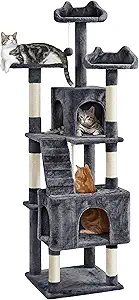
- The Contender: Frisco 72-in Faux Fur Cat Tree & Condo
- Why It Wins: It consistently balances key metrics better than any other single model. It offers substantial height (72″) for climbers, multiple large perches, two condos (one top-entry for security), and is wrapped in dense sisal fabric. Its wide, rectangular base provides excellent stability, and it includes a wall strap—hitting our 2025 safety non-negotiable. It’s priced in the competitive mid-range, offering premium features without a luxury price tag.
- Best For: The majority of 1-3 cat households with cats of mixed personalities. It’s the reliable, feature-complete workhorse.
- Vet Note: Dr. Jackson approves: “Its combination of height, multiple hideaways, and plentiful sisal surfaces addresses the core behavioral needs of most cats effectively. The inclusion of a wall-anchor is a significant safety plus.”
Best Cat Tree for Large Cats in 2025 (The Fortress)

- The Contender: Mau Cento 40-in Modern Wood Cat Tree
- Why It Wins: This pick exemplifies the 2025 shift from bulky carpet towers to engineered stability. Its foundation is a solid, weighted cube, providing a low center of gravity that is inherently tip-resistant. The perch is a generous 20” in diameter, and the entire structure uses commercial-grade, ultra-dense sisal rope on real wood posts. It supports cats over 20lbs with ease and its minimalist, modern design proves heavy-duty doesn’t have to mean industrial.
- Best For: Owners of large breeds (Maine Coon, Ragdoll, Norwegian Forest Cat) who prioritize safety and style.
Best Space-Saving & Stylish Cat Tree in 2025 (The Urbanite)

- The Contender: Tuft + Paw Kitty Bubble
- Why It Wins: It’s not a traditional tree, but a wall-mounted acrylic sphere—a perfect example of 2025’s “pet furniture as art” trend. It saves every inch of floor space while providing an irresistibly cozy, window-like perch that satisfies a cat’s love for high, secure observation points. Its easy-to-clean material and minimalist mounting system are designed for modern living.
- Best For: Apartment dwellers, design enthusiasts, and homes where floor space is at a premium. It’s often used as a stunning supplement to a simpler, ground-based scratching post.
Best Value Cat Tree of 2025 (The Budget MVP)

- The Contender: Yaheetech 63.5-in Multi-Level Cat Tree
- Why It Wins: It delivers an exceptional features-per-dollar ratio. For a very accessible price, you get a full 63.5-inch tower with two condos, three perches, multiple sisal posts, and dangling toys. While the plush may not be premium and assembly requires attention, its core structure is consistently reviewed as surprisingly stable for its class. It allows budget-conscious owners to provide comprehensive vertical territory without compromise.
- Best For: First-time buyers, students, or anyone needing a functional, full-featured tree on a strict budget.
Best Cat Tree with Integrated Litter Box in 2025 (The All-in-One Suite)
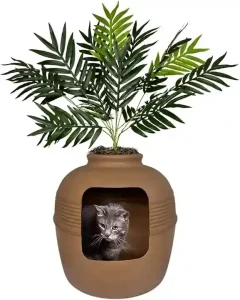
- The Contender: Good Pet Stuff Company Hidden Litter Box
- Why It Wins: This pioneering design cleverly disguises the litter box as a large, potted plant. It’s a true furniture piece, not a modified cat tree. The large dome provides ample headroom for cats, contains litter scatter completely, and uses a carbon filter in the lid to manage odor. It addresses the core problem—hiding the litter box—more elegantly and effectively than most combo tree/box units.
- Best For: Small homes, open-concept spaces, and owners for whom disguising the litter box is the top priority.
Top Questions About Best Cat Trees, Answered by Dr. Allona Jackson, DVM
You’ve got the knowledge and the top picks. Now, let’s tackle those final, practical questions that arise right before you click “buy” or when you’re setting up your new tree. We’ve enlisted Dr. Allona Jackson, DVM to provide clear, actionable answers based on the latest feline behavioral science.
1: “Where is the absolute BEST place in my home to put the cat tree?”
Dr. Jackson’s Answer:
“The location is almost as important as the tree itself. Avoid tucking it away in a dark, lonely corner. Cats are social creatures who want to be near the action, but on their own terms. The ideal placement is in a socially significant area—like the living room or a home office—adjacent to a window with a view. This satisfies two core needs: it allows them to be part of the family’s social circle (which builds confidence) and provides environmental enrichment through birdwatching.
“For multi-cat homes, consider having more than one tree in different rooms to prevent resource guarding and give shy cats alternative vertical escape routes.”
2: “I followed all the advice, but my new cat completely ignores the tree. What now?”
Dr. Jackson’s Answer:
“Don’t panic or return it immediately. Introduction is key. First, make it irresistibly attractive. Rub catnip or silver vine on the sisal posts and perches. Use a pheromone spray like Feliway on the condo lining to signal safety. Place your cat’s favorite treats or meals on the different levels.
“Second, create positive associations. Engage in play near and on the tree. Dangle a wand toy up the posts and onto the perches so they ‘capture’ prey there. Never force them onto it. Patience and positive reinforcement are your best tools. Some cats may need a few days to weeks to fully claim a new piece of furniture.”
3: “How often should I realistically replace or refurbish a cat tree?”
Dr. Jackson’s Answer:
“There’s no set expiration date, but you should perform a ‘safety and sanitation’ inspection every 6 months. Look for:
- Structural Instability: Any wobbling that can’t be tightened away, or leaning.
- Worn-Out Sisal: If the sisal is frayed down to the post core over more than 25% of its surface, it’s no longer effective and can snag claws.
- Damaged or Soiled Plush: If covers are non-removable and have become matted, stained, or harbor odor, they are difficult to sanitize.
“A high-quality tree with replaceable parts (like sisal rolls or washable covers) can last 5+ years. A budget tree may need replacement in 1-3 years. Refurbishing with new sisal rope or replacement pads is a cost-effective option for a solidly built frame.”
4: “What are the real 2025 cat tree trends, and are any worth the hype?”
Dr. Jackson’s Weighs In:
“I see a few intelligent trends gaining traction:
- Modular & ‘Grow-With-Your-Cat’ Systems: These are wall-mounted shelf systems or trees where you can add perches, bridges, and condos over time. This is fantastic for future-proofing and tailoring the environment as a kitten grows or your cat family expands.
- Integrated Calming Technology: Some high-end models now include built-in, plug-in diffusers for pheromones (like Feliway) or holders for calming supplements. For anxious cats or stressful households, this can be a legitimate help when used as part of a broader behavioral plan.
- Ultra-Hygienic, Non-Porous Materials: We’re seeing more easily wiped surfaces like sealed wood, acrylic, and antimicrobial fabrics. This is a significant benefit for multi-cat households or cats with allergies, as it reduces dander and odor buildup.
“The key is to view trends through the lens of your cat’s specific needs. A modular system is a brilliant long-term investment. A calming feature can be a useful tool. But the core tenets—stability, appropriate scratching surfaces, and safe perches—will always be paramount.”


