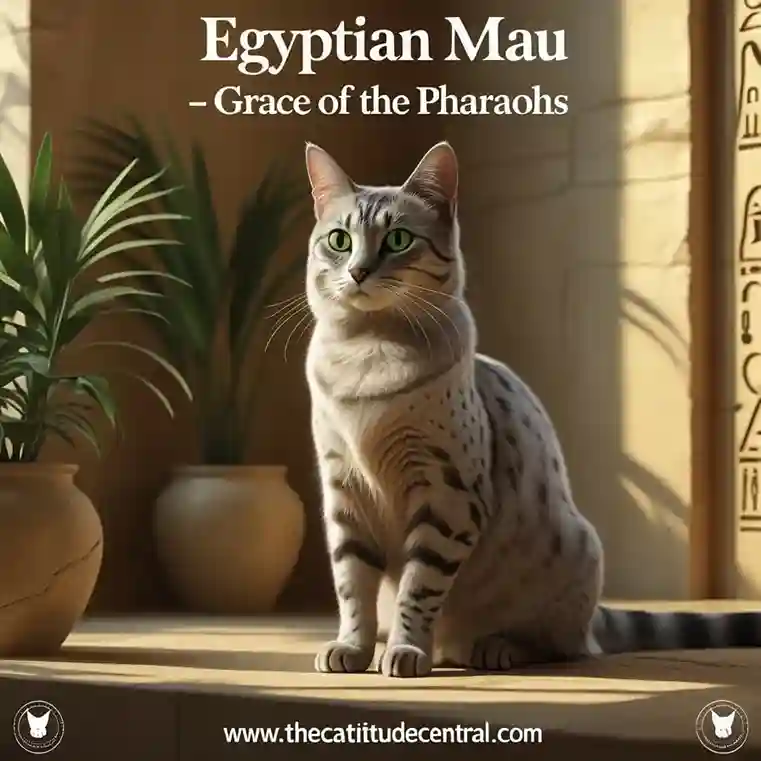
Imagine a cat that combines the grace of a cheetah, the mystique of ancient Egypt, and the loyalty of a devoted companion. Meet the Egyptian Mau, a breed that captivates with its shimmering spotted coat and vibrant personality. Revered in ancient Egyptian culture and cherished by modern cat lovers, the Egyptian Mau is a living piece of history, blending elegance with athleticism.
This blog post dives deep into the world of the Egyptian Mau, exploring its physical traits, spirited temperament, rich history, and care requirements. Whether you’re considering adopting one or simply fascinated by this regal feline, you’ll find everything you need to know about the Egyptian Mau in this comprehensive guide.
The Egyptian Mau stands out not just for its beauty but for its unique place in the feline world. Known as the fastest domestic cat breed, capable of reaching speeds up to 30 miles per hour, the Mau’s cheetah-like agility is matched by its affectionate and intelligent nature. From its ancient origins to its modern-day charm, this breed has a story worth telling. Let’s embark on a journey to uncover the allure of the Egyptian Mau.
🐾 Recommended for Pet Parents
Discover trusted resources, tips and tools for your furry friend!
Explore Free Pet Resources →Physical Characteristics
A Slender, Elegant Build
The Egyptian Mau is a medium-sized cat with a slender, elongated body that exudes grace and power. Typically weighing between 6 to 14 pounds, Maus have a balanced physique that’s neither too delicate nor overly robust. Their bodies are built for agility, with long, tapering tails and strong, lean legs that contribute to their distinctive gait.
The Signature Spotted Coat
The hallmark of the Egyptian Mau is its naturally spotted coat, a feature that sets it apart from other breeds. Unlike breeds with artificially bred patterns, the Mau’s spots are a natural trait, reminiscent of wild felines like the cheetah or serval. The short, dense coat is silky to the touch and shimmers under light, enhancing the cat’s ethereal beauty. The spots vary in size and shape, scattered randomly across the body, giving each Mau a unique pattern.
Color Variations
Egyptian Maus come in four recognized color variations:
- Silver: A shimmering silver base with charcoal-black spots, the most common and striking color.
- Bronze: A warm, golden-brown base with darker brown spots, evoking the sands of Egypt.
- Smoke: A charcoal-gray base with a silvery undercoat and black spots, creating a mystical effect.
- Black: A solid black coat, though these cats are not typically shown in competitions, as the spots are less visible.
Each color enhances the breed’s exotic appeal, making the Mau a visual masterpiece.
Facial Features and Unique Markings
The Egyptian Mau’s face is as captivating as its body. Its large, almond-shaped eyes, typically gooseberry green, convey a sense of curiosity and intelligence. The ears are moderately large, slightly pointed, and set high on the head, giving the Mau an alert expression. One of the breed’s most iconic features is the “M” marking on its forehead, often accompanied by “mascara lines” that extend from the corners of the eyes, enhancing its regal appearance.
The Cheetah-Like Gait
The Egyptian Mau moves with a fluid, almost predatory grace. Its hind legs are slightly longer than the front, giving it a distinctive, springy gait that mimics the stride of a cheetah. This unique movement, combined with its athletic build, makes the Mau a standout in both appearance and motion.
Temperament and Personality
Playful and Energetic
The Egyptian Mau is a bundle of energy, with a playful streak that lasts well into adulthood. These cats love to leap, chase, and explore, making them ideal for owners who enjoy interactive play. Whether it’s pouncing on a feather toy or scaling a cat tree, the Mau’s enthusiasm is infectious.
Intelligent and Curious
Maus are highly intelligent, often figuring out how to open doors, solve puzzles, or get into mischief. Their curiosity drives them to investigate every nook and cranny of their environment, so expect a cat that’s always on the move, observing and learning.
Affectionate and Loyal
Despite their wild appearance, Egyptian Maus are deeply affectionate and form strong bonds with their owners. They’re known for choosing a favorite human, following them around the house and offering gentle head-butts or purrs to show their devotion. While not overly clingy, they thrive on attention and love being part of the family.
Social and Vocal
Egyptian Maus are moderately social and generally get along well with other pets and children, provided introductions are gradual. They’re not as vocal as breeds like the Siamese, but they communicate with a range of soft chirps, chortles, and trills that add to their charm. These vocalizations often sound like a friendly conversation, making the Mau an engaging companion.
History and Cultural Significance
Ancient Egyptian Roots
The Egyptian Mau’s history is steeped in the mystique of ancient Egypt, where cats were revered as sacred beings. Depictions of spotted cats appear in ancient Egyptian art, including tomb paintings and sculptures, suggesting that the Mau’s ancestors were cherished as symbols of protection and grace. The name “Mau” itself comes from the ancient Egyptian word for “cat,” reflecting the breed’s deep cultural ties.
Modern Breed Development
The modern Egyptian Mau owes its existence to Princess Natalie Troubetskoy, a Russian exile who brought the breed to the United States in the 1950s. Troubetskoy imported Maus from Italy, where she had encountered cats with the distinctive spotted coat. Through careful breeding, she established the breed in North America, gaining recognition from the Cat Fanciers’ Association (CFA) in 1977 and The International Cat Association (TICA) shortly after. Today, the Egyptian Mau remains a rare breed, prized for its natural beauty and historical significance.
Cultural Legacy
The Egyptian Mau’s connection to ancient Egypt continues to captivate cat lovers. Its resemblance to the cats worshipped by pharaohs adds an air of mystique, making it a favorite among those drawn to history and mythology. The breed’s rarity and elegance further enhance its status as a feline treasure.
Care and Maintenance
Grooming Needs
The Egyptian Mau’s short, dense coat is low-maintenance, requiring only weekly brushing to remove loose hair and maintain its glossy shine. Occasional baths can help keep the coat clean, but Maus are fastidious self-groomers, so extensive grooming is rarely needed. Regular nail trims, ear cleaning, and dental care are essential to keep your Mau in top health.
Diet and Nutrition
A balanced, high-quality diet is crucial for the Egyptian Mau’s active lifestyle. Choose premium cat food rich in protein to support their muscle development and energy needs. Wet food can help with hydration, while dry kibble aids in dental health. Consult a veterinarian to determine portion sizes and avoid overfeeding, as Maus can be prone to weight gain if not exercised regularly.
Exercise Requirements
Egyptian Maus are high-energy cats that need ample opportunities to burn off steam. Provide interactive toys like feather wands, laser pointers, or puzzle feeders to engage their hunting instincts. Cat trees, tunnels, and perches allow them to climb and explore, satisfying their need for vertical space. Daily play sessions of 15–20 minutes are ideal to keep your Mau physically and mentally stimulated.
Common Health Issues
While generally healthy, Egyptian Maus can be susceptible to certain conditions, including:
- Hypertrophic Cardiomyopathy (HCM): A heart condition common in many cat breeds. Regular veterinary checkups and screenings can help detect it early.
- Dental Issues: Periodontal disease can be a concern, so routine teeth brushing is recommended.
- Obesity: Due to their love of food, monitor their weight to prevent health complications.
With proper care, Egyptian Maus typically live 12–18 years, bringing joy to their families for well over a decade.
Living Environment
Ideal Home Setup
Egyptian Maus thrive in environments that cater to their active and curious nature. A spacious home with plenty of vertical space—think cat trees, shelves, or window perches—is ideal. Interactive toys and scratching posts are must-haves to keep them entertained. If you live in a small apartment, ensure there are enough enrichment activities to prevent boredom.
Compatibility with Others
Maus are generally sociable and adapt well to homes with children or other pets, provided they’re introduced properly. Their playful nature makes them great companions for respectful kids, and they often coexist peacefully with other cats or cat-friendly dogs. However, their high energy may overwhelm more sedentary pets.
Indoor vs. Outdoor Living
Egyptian Maus are best suited to indoor living due to their rare and valuable nature, as well as their vulnerability to outdoor hazards like traffic or predators. If you want to provide outdoor access, consider a secure catio or leash training for supervised adventures. Their speed and curiosity make free-roaming risky, so indoor environments with plenty of stimulation are preferred.
Breeding and Adoption
Finding a Reputable Breeder
If you’re set on welcoming an Egyptian Mau into your home, choosing a reputable breeder is critical. Look for breeders registered with CFA or TICA who prioritize health, temperament, and ethical practices. Ask for health certifications, including screenings for HCM and genetic disorders. Visiting the cattery to meet the cats and see their living conditions is a good way to ensure you’re supporting a responsible breeder.
Adoption Options
While Egyptian Maus are rare, adoption is sometimes possible through breed-specific rescues or shelters. Organizations like the Egyptian Mau Rescue Organization (EMRO) occasionally have Maus available for adoption. Check local shelters or online platforms like Petfinder, but be prepared for a longer search due to the breed’s rarity.
Cost Considerations
Purchasing an Egyptian Mau from a breeder can cost $1,000–$2,500, depending on pedigree, color, and location. Adoption fees are typically lower, ranging from $100–$500. Ongoing costs include food, grooming supplies, veterinary care, and enrichment items like toys and cat trees. Budgeting for these expenses ensures your Mau lives a happy, healthy life.
Fun Facts and Trivia
- Speedy Sprinters: The Egyptian Mau is the fastest domestic cat breed, capable of running up to 30 miles per hour, thanks to its cheetah-like build.
- Natural Spots: Unlike other spotted breeds, the Mau’s coat pattern is entirely natural, a trait inherited from its ancient ancestors.
- Mythological Ties: In ancient Egypt, cats were associated with the goddess Bastet, and the Mau’s spotted coat likely made it a symbol of divine protection.
- Chirping Communicators: Maus are known for their unique vocalizations, including chirps and chortles, which sound like a mix of a purr and a meow.
- Rare Gem: The Egyptian Mau is one of the rarest cat breeds, with only a few thousand registered worldwide, making them a true treasure for cat enthusiasts.
FAQs About the Egyptian Mau
1. Are Egyptian Maus good with children?
Yes, Egyptian Maus are generally good with children who are gentle and respectful. Their playful nature makes them great playmates, but supervision is recommended with younger kids to ensure interactions are positive.
2. Do Egyptian Maus require a lot of grooming?
No, their short, dense coat is low-maintenance. Weekly brushing and occasional baths are sufficient, along with regular nail trims and dental care.
3. Are Egyptian Maus vocal?
They’re moderately vocal, using soft chirps and chortles to communicate rather than loud meows. Their vocalizations are often described as charming and conversational.
4. Can Egyptian Maus live in apartments?
Yes, they adapt well to apartments if provided with enough vertical space, toys, and playtime to satisfy their active nature.
5. How fast can an Egyptian Mau run?
Egyptian Maus are the fastest domestic cat breed, capable of reaching speeds up to 30 miles per hour due to their athletic build.
6. Are Egyptian Maus prone to health issues?
While generally healthy, they can be susceptible to hypertrophic cardiomyopathy (HCM) and dental issues. Regular vet checkups and a healthy diet help mitigate risks.
7. Where can I find an Egyptian Mau to adopt?
Check breed-specific rescues like the Egyptian Mau Rescue Organization (EMRO) or platforms like Petfinder. Reputable breeders registered with CFA or TICA are also an option.
8. How much does an Egyptian Mau cost?
Purchasing from a breeder typically costs $1,000–$2,500, while adoption fees range from $100–$500. Ongoing care costs include food, vet visits, and supplies.
Final Thoughts
The Egyptian Mau is more than just a beautiful cat—it’s a living link to ancient history, a bundle of energy, and a loyal companion wrapped in a stunning spotted package. From their cheetah-like agility to their affectionate, intelligent personalities, Maus bring a unique blend of elegance and playfulness to any home. Whether you’re drawn to their historical significance, captivated by their shimmering coats, or charmed by their spirited antics, the Egyptian Mau is a breed that leaves a lasting impression.
If you’re considering adding a feline friend to your life, the Egyptian Mau might just be the perfect fit. Their low-maintenance care, vibrant personalities, and striking appearance make them a joy to own. Ready to welcome a piece of ancient Egypt into your home? Explore reputable breeders or adoption options, and prepare to fall in love with the majestic Egyptian Mau.
Share your experience in the comments below! If you’re looking for more pet care tips or product reviews, subscribe to our YouTube Channel for the latest updates. Happy grooming, and here’s to a cleaner, happier home with your furry friend!
Sources
- Cat Fanciers’ Association
- The International Cat Association
- Egyptian Mau Rescue Organization
- PetMD.
- ASPCA.
- Cornell Feline Health Center.