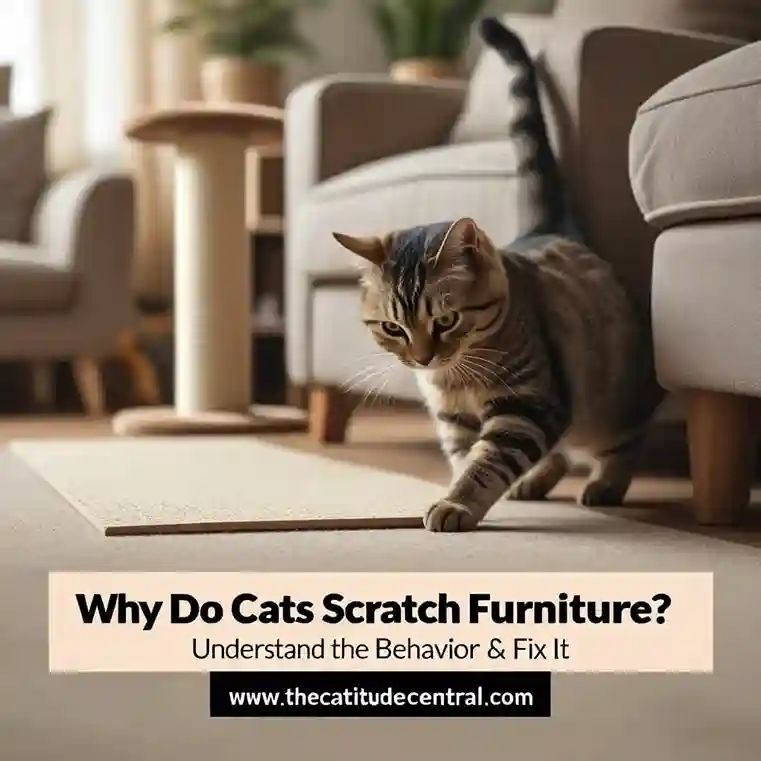
You’ve just bought a new sofa, and within days, your cat has started using it as their personal scratching pad. It’s a frustrating and confusing scenario for any pet owner. But what if we told you your cat isn’t being spiteful or intentionally destructive? The answer to why do cats scratch furniture lies in understanding their deep-rooted, natural instincts.
Scratching is a complex and essential behavior for felines, serving multiple purposes that go far beyond simple claw maintenance. When you understand the “why,” you can stop fighting the behavior and start providing solutions that work for both you and your cat.
In this article, we’ll uncover the five surprising reasons behind this common behavior. Once you understand the motivations, you’ll be equipped to choose the right outlet for your cat’s needs. For a comprehensive guide to selecting that perfect outlet, our pillar resource, Best Cat Scratching Post: The Ultimate 2025 Guide & Reviews, is your essential next step.
🐾 Recommended for Pet Parents
Discover trusted resources, tips and tools for your furry friend!
Explore Free Pet Resources →Let’s decode your cat’s behavior together.
Key Takeaways: Understanding the “Why”
Before we dive into the specific reasons, understanding these core principles will completely change how you view your cat’s scratching behavior.
- 🧠 It’s Instinct, Not Spite: Your cat isn’t trying to punish you. Scratching is a hardwired, normal behavior crucial to their well-being.
- 💬 Communication is Key: Scratching is one of your cat’s primary ways to communicate, leaving both visual marks and scent signals for themselves and other animals.
- 🔄 It’s Multifunctional: Scratching isn’t just one thing. It simultaneously serves several physical and emotional purposes, from claw care to stress relief.
- 🎯 You Can’t Stop It, But You Can Redirect It: Trying to eliminate scratching is a losing battle. The successful strategy is to provide a better, more appealing alternative.
Reason 1: Claw Maintenance
This is the most well-known reason, but it’s more than just sharpening. Scratching is essential for your cat’s physical health.
- Shedding the Outer Sheath: A cat’s claw grows in layers. Scratching helps remove the dead outer sheath, revealing the new, sharp claw underneath. This is a vital grooming process.
- Muscle Exercise: The act of scratching stretches and flexes the muscles in their paws, legs, and back, promoting healthy circulation and flexibility.
- Visual Cue: You’ll often find the thin, translucent outer sheaths of claws left behind on a scratching post or your furniture—a clear sign this process is at work.
Reason 2: Scent Marking (The Invisible Message)
This is one of the most surprising reasons for many owners. Cats have scent glands located in their paw pads, and scratching is a powerful way to leave their signature.
- Personal “Business Card”: When your cat scratches, they release their unique scent from these glands onto the surface. This scent acts as a territorial marker, signaling to other animals, “I was here. This is my space.”
- Creating a Familiar Environment: This marking behavior helps your cat feel secure and comfortable in their home. Their own scent makes the environment feel familiar and safe.
- Why Furniture? Your furniture, especially in central social areas, becomes a prime spot for marking because it’s a prominent object that you, their favorite person, interact with regularly. They are mingling their scent with yours.
Reason 3: Visual Marking (The “See What I Did” Sign)
While scent marking is invisible, cats also scratch to leave a highly visible record of their presence. This combines with scent marking to create a powerful territorial statement.
- The “Billboard” Effect: The visible scratches and gouges left on a surface serve as a clear visual signal to other cats. This is a cat’s way of saying, “Look how big and strong I am,” demonstrating their presence and confidence.
- Height Matters: You’ll often notice cats prefer to scratch on vertical surfaces at a height that allows for a full stretch. This maximizes the visibility of the marks and may also be a way to appear larger to potential rivals.
- A Sign of Security: While it’s frustrating for owners, this behavior in a home is often a sign that your cat feels comfortable and secure enough to claim the space as their own.
Reason 4: Stretching & Exercise (The Feline Yoga)
Scratching is the ultimate full-body workout for a cat. It’s an instinctive way to keep their muscles toned and flexible.
- The Ultimate Full-Body Stretch: Watch your cat the next time they scratch. You’ll see them dig their claws in, then push back, arching their back and extending their spine, shoulders, and legs in one fluid motion. This is a vital part of their physical maintenance.
- Maintaining Muscle Health: This regular stretching helps prevent muscle stiffness, promotes healthy blood flow, and keeps their joints agile. It’s especially important for indoor cats who have less opportunity for vigorous activity.
- A Morning Ritual: You’ll often see your cat scratching right after a nap. Just like humans might stretch when they wake up, cats use scratching to work out the kinks and prepare their bodies for the day (or night) ahead.
Reason 5: Emotional Expression (The Mood Meter)
Scratching isn’t just physical—it’s deeply emotional. Your cat’s scratching can be a barometer for their feelings, from pure joy to underlying stress.
- A Release of Excitement or Joy: Have you ever seen your cat scratch enthusiastically after a play session or when you come home? This is often an outlet for happy, pent-up energy, similar to a happy dance.
- Coping with Stress and Anxiety: Conversely, scratching can be a coping mechanism. Changes in the household, a new pet, or loud noises can trigger stress-scratching. The repetitive motion and the act of marking their territory can be comforting and help them self-soothe.
- Boredom Buster: An under-stimulated cat with little to do may turn to scratching simply as a way to relieve boredom and entertain themselves. This highlights the importance of providing plenty of play and environmental enrichment.
How to Work With Your Cat’s Natural Instincts
Now that you understand why your cat scratches, you can stop fighting their nature and start working with it. Here’s how to address each instinctual need with a positive solution.
For Claw Maintenance & Stretching:
- Provide tall, sturdy posts that allow for a full-body stretch. The post should be at least 30 inches high and stable enough not to wobble.
- Offer a variety of textures like sisal rope, cardboard, and wood to see which your cat prefers for claw care.
For Scent & Visual Marking:
- Place scratching posts in prominent social areas and near your cat’s favorite sleeping spots. This allows them to mark their core territory appropriately.
- If your cat is scratching a specific piece of furniture, place a new scratching post directly in front of it to redirect the marking behavior to an acceptable target.
For Emotional Expression:
- Provide ample play and enrichment to prevent boredom and stress-related scratching. Use interactive toys and schedule regular play sessions.
- Use synthetic feline pheromone sprays on new scratching posts to create a calming, familiar scent that encourages use.
- Create a consistent routine to reduce anxiety-driven scratching.
When Scratching Indicates a Problem
While scratching is normal, a sudden increase, a change in location, or excessively aggressive scratching can be a red flag that something is wrong.
Medical Issues to Rule Out:
- Skin Conditions: Allergies or parasites can cause itchiness, leading a cat to scratch surfaces to find relief.
- Pain: Arthritis or an injury in their paws or back might cause them to scratch more frequently or oddly as they try to stretch and alleviate discomfort.
Behavioral Red Flags:
- Stress & Anxiety: A major change in the household (a new pet, a move, a new baby) can cause a cat to over-scratch as a coping mechanism. This is often accompanied by other signs like hiding or changes in appetite.
- Litter Box Avoidance: If a cat is scratching excessively around the litter box area, it can signal an issue with the box itself (cleanliness, type of litter, location) or an underlying urinary tract problem.
When to Seek Help:
- If the scratching is destructive and relentless, despite providing appropriate outlets.
- If it’s accompanied by other behavioral changes like aggression, excessive vocalization, or not using the litter box.
- Consult your veterinarian first to rule out medical causes, then a certified cat behavior consultant for persistent behavioral issues.
FAQs About why do cats scratch furniture
Do declawed cats still scratch?
Yes, absolutely. The instinct to perform the scratching motion remains, even if the claws are gone. Declawed cats will often continue to “scratch” surfaces as a way to stretch, mark territory with the scent glands in their paws, and express emotions. Providing a soft scratching post or pad is still important for their well-being.
Are some cat breeds more prone to scratching?
While all cats scratch, high-energy and highly active breeds like Bengals, Abyssinians, and Siamese may scratch more frequently due to their need for more stimulation and activity. Larger breeds, like Maine Coons, need sturdier, taller posts to accommodate their size.
Can you train a cat not to scratch at all?
No, and you shouldn’t try. Scratching is a fundamental, healthy feline behavior. The goal is not to stop the scratching but to redirect it to appropriate, cat-approved surfaces like scratching posts and pads, thereby saving your furniture.
Why does my cat scratch after using the litter box?
This is often a natural, instinctive behavior related to scent marking. By scratching nearby surfaces after eliminating, your cat is further marking the area as their territory. It can also be a sign of satisfaction or a simple burst of energy.
Conclusion
Understanding why do cats scratch furniture transforms it from a frustrating mystery into a manageable aspect of cat ownership. Your cat isn’t being naughty; they are simply following deep-seated instincts for claw care, communication, stretching, and emotional expression.
The key takeaway is that you cannot—and should not—eliminate this natural behavior. Instead, success lies in working with your cat’s instincts, not against them. By providing appealing alternatives like tall, sturdy scratching posts and placing them in strategic locations, you can protect your furniture while ensuring your cat’s well-being.
For the ultimate guide to finding those perfect alternatives, from top-rated sisal posts to space-saving solutions, your essential resource is our comprehensive pillar article: Best Cat Scratching Post: The Ultimate 2025 Guide & Reviews. With patience and the right tools, you can create a home where both your furniture and your feline friend can thrive together.
Sources:
- International Cat Care
- American Association of Feline Practitioners (AAFP)
- Cornell Feline Health Center
- Journal of Feline Medicine and Surgery
Disclaimer: The information provided in this article is for educational purposes only and is not a substitute for professional veterinary or behavioral advice. If you have concerns about your cat’s scratching behavior or health, please consult your veterinarian or a certified cat behaviorist.