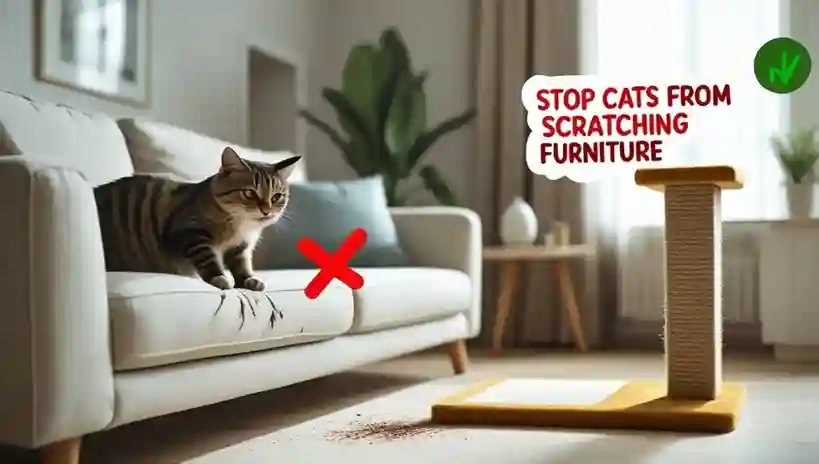
The sight of shredded fabric and claw marks on your favorite armchair is enough to frustrate any cat owner. If you’re searching for a way how to stop a cat from scratching furniture, you’re likely feeling desperate for a solution that actually works. The good news is that this destructive behavior can be redirected, and it doesn’t require endless yelling or punishment.
The secret isn’t to stop the scratching—which is a natural and healthy instinct for your cat—but to give them a better, more appealing place to do it. This requires a strategic approach that addresses the why behind the behavior.
In this actionable guide, we break down a proven, 5-step solution used by cat behaviorists. We’ll cover everything from making your furniture less attractive to choosing the perfect alternative. Speaking of alternatives, the cornerstone of this entire plan is providing an exceptional scratching post. For a deep dive into selecting the very best option, our pillar resource, Best Cat Scratching Post: The Ultimate 2025 Guide & Reviews, is your essential companion to this guide.
🐾 Recommended for Pet Parents
Discover trusted resources, tips and tools for your furry friend!
Explore Free Pet Resources →Let’s save your furniture and restore peace to your home.
Key Takeaways: Your Action Plan
Before we dive into the steps, here are the core principles that form the foundation of this solution. Success depends on consistency and a positive approach.
- 🚫 Never Punish: Yelling, spraying water, or rubbing your cat’s nose in the damage will only create fear and break trust, making the problem worse.
- 🎯 Provide a Better Alternative: The goal is to make the scratching post more appealing than your furniture. This is the most critical step.
- 📍 Location is Everything: A scratching post hidden in a corner will fail. It must be placed where your cat wants to scratch.
- ⏳ Be Patient and Consistent: Retraining takes time. It may take 2-4 weeks of consistent effort to see lasting results. Don’t give up after a few days!
Step 1: Make Furniture Less Appealing
The first step is to immediately reduce your cat’s desire to scratch the furniture. This involves using safe, effective deterrents that make your couch or chair an unsatisfying target.
- Use Double-Sided Sticky Tape: Apply wide, double-sided tape (like Sticky Paws) to the arms, corners, or sides of the furniture your cat targets. Cats hate the sticky feeling on their paws and will quickly learn to avoid that surface.
- Apply Citrus or Pheromone Sprays: Lightly spritz the area with a citrus-scented spray or a synthetic feline pheromone spray like Feliway. Cats generally dislike citrus scents, while pheromones can have a calming effect that reduces the urge to mark territory.
- Employ Plastic or Vinyl Covers: Temporarily cover the scratched areas with a smooth plastic mat, vinyl runner (nubby side up), or even aluminum foil. These textures are unappealing for scratching and protect the fabric underneath.
- Create a Physical Barrier: For chair or sofa legs, consider wrapping them in a sisal rope post designed to fit over furniture. This turns the “problem” into an approved scratching surface.
Step 2: Provide a Better Alternative
This is the most critical step. You must offer a scratching post that is more attractive, stable, and well-placed than your furniture. A poor-quality post will doom your efforts from the start.
- Choose the Right Post: Don’t just grab the cheapest option. The post must be:
- Tall & Sturdy: At least 30 inches high with a wide, weighted base that doesn’t wobble. A cat needs to stretch fully.
- Made of the Right Material: Most cats prefer rough, shreddable sisal rope. Observe if your cat prefers vertical or horizontal surfaces and choose accordingly.
- Strategic Placement is Non-Negotiable: Place the new post directly in front of or secured to the furniture they were previously scratching. This provides an immediate, appropriate alternative. Once they use it reliably, you can move it a few inches each day to a more convenient—but still prominent—location.
- Make it Irresistible: Rub catnip into the post or use a pheromone spray. Dangle a wand toy around it to encourage them to connect their paws with the surface during play.
The Foundation of Success: For a detailed breakdown of how to select a post that guarantees success, our pillar guide to the Best Cat Scratching Post is your most valuable resource.
Step 3: Use Positive Reinforcement
Now that you’ve provided an excellent alternative, you need to teach your cat that using it is a wonderful thing. Positive reinforcement is the fastest and most effective way to build this good habit.
- The “Catch and Reward” Method: When you see your cat using the scratching post—even for a single scratch—immediately reward them. Use a high-value treat, enthusiastic praise (“Good cat!”), or a quick petting session. The timing is crucial; the reward must come during or immediately after the desired behavior.
- Create Positive Associations: Keep a container of treats near the post for the first few weeks. Every time you walk by it with your cat, you can encourage them to investigate it and reward any interest. You can also incorporate the post into playtime by dragging a toy around its base.
- What Not to Do: Never force your cat’s paws onto the post or punish them for scratching furniture. This creates a negative association with the post and damages your bond. The goal is to make the post a source of good things, not fear.
Step 4: Create a Scratching-Friendly Environment
A single scratching post is often not enough, especially in a multi-cat home or a large space. To fully solve the problem, you need to think strategically about your cat’s entire environment.
- The “Plus One” Rule: Provide one more scratching post than you have cats. In a two-cat home, you should have at least three scratching surfaces. This prevents competition and gives each cat options.
- Multi-Room Strategy: Place scratching posts in all the main social areas your cat frequents—the living room, home office, and bedroom. A post should be easily accessible wherever your cat spends time.
- Variety is Key: Offer different types of scratchers. Combine a tall, sturdy sisal post with a horizontal cardboard scratcher and perhaps a wall-mounted pad. This caters to different scratching moods and preferences. For households with larger, more active cats, our guide to the best cat tree for large cats can help you find heavy-duty options that provide this variety on a grand scale.
Step 5: Be Patient and Consistent
This final step is what ties everything together. Retraining your cat’s behavior is a process that requires time and unwavering consistency.
- Set a Realistic Timeline: Expect this process to take 2 to 4 weeks of consistent application of all five steps. Some cats may learn in a few days, while others, especially those with long-established habits, will take longer. Do not get discouraged if you don’t see immediate results.
- Maintain a Routine: Cats thrive on predictability. Keep your training routine consistent. Reward every single correct use of the post during the initial training phase. Consistently reapply deterrents to the furniture if your cat tests it.
- Troubleshoot, Don’t Give Up: If your cat is not using the post after a week, don’t abandon the plan. Re-evaluate:
- Is the post stable enough?
- Is it in the absolute best location?
- Are you using a high-enough value treat as a reward?
- Have you tried a different material, like cardboard?
Remember, you are guiding your cat to make a better choice. With patience and consistency, the new habit will stick, and you’ll have a peaceful, scratch-free home.
When to Seek Professional Help
While most scratching issues can be resolved with these steps, sometimes you need to call in the experts. Here’s when it’s time to seek professional guidance.
- Signs You Need a Veterinarian:
- Sudden behavior changes accompanied by other symptoms like lethargy or hiding.
- Excessive scratching that seems compulsive or focused on one area of their body.
- Signs of pain like limping or vocalizing when scratching.
- Signs You Need a Cat Behaviorist:
- The 5-step solution fails after 4+ weeks of consistent effort.
- Scratching is combined with aggression toward people or other pets.
- Your cat shows signs of severe anxiety like inappropriate urination or excessive hiding.
- You’re dealing with multiple behavioral issues beyond just scratching.
- Where to Find Help:
- Start with your veterinarian to rule out medical causes.
- For behavior issues, look for a certified cat behavior consultant (IAABC) or veterinary behaviorist.
FAQs About How To Stop A Cat From Scratching Furniture
How long until I see results?
Most cats show significant improvement within 2-4 weeks of consistent training. However, some cats with long-established habits may take longer. The key is consistency with all five steps.
What if my cat hates all scratching posts?
First, ensure the post is tall and stable enough. Then, experiment with different materials—try cardboard, carpet, or wood. Place the post in a prime social location and use catnip or pheromone spray to attract your cat.
Are certain cat breeds harder to train?
High-energy breeds like Bengals and Abyssinians may scratch more due to boredom and require more enrichment. However, all cats can be trained using positive reinforcement—it’s about finding the right motivation.
Can older cats be retrained?
Yes, but it may require more patience. Older cats have stronger habits, but they respond well to consistent positive reinforcement. Make sure their post is easily accessible and comfortable for them to use.
Conclusion
Stopping your cat from scratching furniture isn’t about punishment or trying to eliminate a natural behavior—it’s about smart redirection. By following this 5-step solution—making furniture unappealing, providing a superior alternative, using positive reinforcement, creating a scratching-friendly environment, and being patient—you can successfully guide your cat toward better habits.
Remember, the cornerstone of this entire process is providing a scratching post that your cat actually wants to use. For a comprehensive guide to finding that perfect, enticing post, from top-rated sisal columns to multi-functional cat trees, your essential resource is our pillar article: Best Cat Scratching Post: The Ultimate 2025 Guide & Reviews.
With consistency and the right tools, you can create a home where both your furniture and your feline friend can coexist peacefully.
Sources:
- International Cat Care
- American Association of Feline Practitioners (AAFP)
- Cornell Feline Health Center
- Journal of Feline Medicine and Surgery
Disclaimer: The information provided here is for educational purposes only and is not a substitute for professional veterinary or behavioral advice. If your cat’s scratching behavior is excessive, compulsive, or accompanied by other concerning symptoms, please consult your veterinarian or a certified animal behaviorist.